
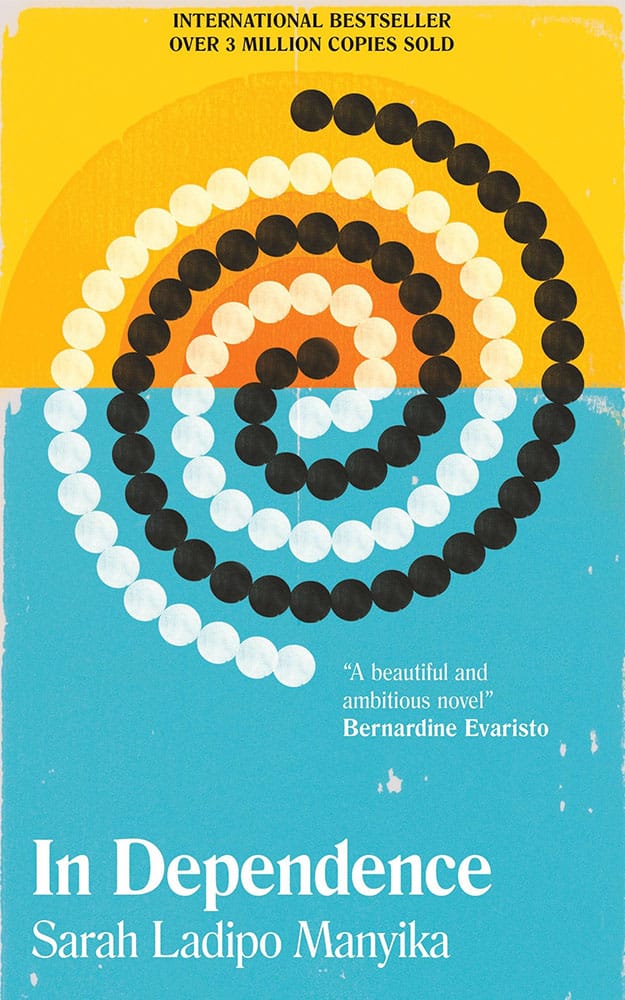
In Dependence
₦10,000.00 – ₦14,000.00Price range: ₦10,000.00 through ₦14,000.00
They found love at Oxford as a new Nigeria found freedom. Could either survive the weight of history?
In 1960s England, Nigerian scholarship student Tayo Ajayi falls in love with Vanessa Richardson, the daughter of a former colonial officer.
Their passionate relationship defies race, family and convention. Yet separation, political upheaval and painful choices repeatedly pull them towards different futures.
Spanning three continents and four turbulent decades, In Dependence by Sarah Ladipo Manyika is a sweeping, bittersweet love story about colonial history, belonging and the people we never completely leave behind.
In Dependence: 40 Powerful Years of Love and History
They meet as Nigeria embraces independence. Their love promises freedom, but history, race and family have other plans.
In the early 1960s, Tayo Ajayi leaves Nigeria after receiving a scholarship to study at Oxford University.
He arrives in England filled with intelligence, ambition and the optimism of a generation imagining a new future for Africa.
At Oxford, Tayo meets Vanessa Richardson. She is the beautiful and independent daughter of a former British colonial officer who once served in Nigeria.
The attraction between them is immediate, but their relationship develops within a world still shaped by empire, racial prejudice and unequal ideas about whose lives belong together.
In Dependence by Sarah Ladipo Manyika follows Tayo and Vanessa across three continents and four turbulent decades. It is a moving story of love, separation, political change and the choices that can shape an entire lifetime.
A Love Story Born at Oxford
Tayo arrives at Oxford during a period of extraordinary social transformation. African countries are becoming independent, civil rights movements are gaining momentum and young people are challenging inherited ideas about race, gender and authority.
Within this atmosphere of possibility, Tayo and Vanessa are drawn towards each other. They share ideas, ambitions and a belief that the world can become more open than the one created by their parents.
Tayo is confident, charming and intellectually curious. Vanessa possesses an independent spirit and wants to define herself beyond the expectations attached to her family.
Their relationship is tender and passionate, but it is never separated from the political history surrounding them.
Vanessa’s father represents Britain’s colonial relationship with Nigeria. His objections force the couple to recognise that private love cannot automatically escape public prejudice.
In Dependence transforms their romance into a compelling examination of what happens when two people challenge the boundaries created by race, culture and history.
Love Across Race and Culture
Tayo and Vanessa believe their connection should be enough to overcome the differences between their backgrounds.
Yet an interracial relationship in 1960s Britain attracts suspicion and hostility. The couple must navigate assumptions about African men, white British women and relationships formed across colonial boundaries.
Their differences extend beyond race. They have been shaped by separate family histories, cultural traditions and expectations about marriage.
Love allows them to imagine a shared future. It also exposes the fears and unresolved tensions each person carries.
The novel treats cultural difference with sensitivity. Neither Tayo nor Vanessa represents an entire country, and neither person possesses perfect knowledge of the other.
Through their mistakes and misunderstandings, In Dependence shows that love across cultures requires more than attraction. It requires courage, honest communication and the willingness to confront inherited prejudice.
Nigeria at the Beginning of Independence
Tayo’s personal journey unfolds alongside Nigeria’s transformation from British colony to independent nation.
Independence creates enormous hope. Young Nigerians studying abroad imagine returning home to build institutions, strengthen education and contribute to a more prosperous country.
Tayo belongs to this optimistic generation. His scholarship represents both personal achievement and the promise of national progress.
However, Nigeria’s early hopes are followed by political instability, military coups, civil conflict and economic uncertainty.
As the country changes, Tayo’s life also moves through periods of possibility, disappointment and painful compromise.
In Dependence places historical events behind an intimate human story. Politics matters because it affects where people can live, whom they can reach and what futures remain possible.
When Personal Choices Become History
Tayo and Vanessa’s separation is not caused by one simple obstacle. Their lives are redirected through family responsibilities, political events, misunderstandings and choices made under emotional pressure.
At different moments, each character must decide between desire and duty. Those decisions create consequences that continue long after the original circumstances have changed.
The novel understands that people do not always recognise the importance of a choice while making it. A moment of hesitation can alter decades.
Tayo and Vanessa continue developing as individuals even when they are apart. They form relationships, build careers and accept responsibilities that make returning to their former love increasingly complicated.
This gives In Dependence its bittersweet emotional force. Their relationship survives in memory, but memory cannot erase everything that has happened since Oxford.
A Story Spanning Three Continents
The novel moves between Africa, Europe and America, following characters whose identities cannot be contained within a single national border.
Oxford represents youth, intellectual discovery and the possibility of reinvention. Nigeria represents family, responsibility and Tayo’s desire to participate in his country’s future.
Other locations reveal the expanding African diaspora and the different ways people build lives away from their countries of origin.
Travel does not automatically create belonging. Characters can feel connected to more than one place while remaining completely at home in none of them.
In Dependence explores this tension through friendships, marriages and professional lives shaped by movement.
The international setting makes the novel ideal for readers interested in African diaspora literature, migration and cross cultural identity.
The Meaning Behind the Title
The title plays with the ideas of independence, dependence and interdependence.
Nigeria gains political independence from Britain, but colonial relationships continue influencing economics, education, culture and international power.
Tayo and Vanessa value personal freedom, yet their lives remain connected to families, countries and historical forces beyond their control.
The novel asks whether complete independence is ever possible. People depend upon relationships, memories and communities even when they consider themselves free.
In Dependence also examines the relationship between Africa and the wider world. Nigeria is not isolated from global history, and Britain cannot separate its present identity from its colonial past.
The carefully divided title therefore captures both political independence and the many forms of dependence that continue beneath it.
Race, Colonialism and Belonging
Race affects how Tayo is perceived in Britain. His intelligence and Oxford scholarship do not protect him from stereotypes about African men.
Vanessa must also confront the assumptions surrounding a white British woman who chooses an African partner.
Their experiences expose the difference between liberal ideals and private behaviour. People who support equality in principle may resist it when it enters their own family.
The legacy of colonialism also shapes how Britain and Nigeria understand each other. Personal relationships carry memories of political domination, cultural judgment and unequal power.
Rather than turning these issues into abstract arguments, In Dependence shows how they enter conversations, family decisions and intimate moments.
The result is a postcolonial novel in which history is felt through the lives of recognisable and emotionally complicated people.
Faith, Family and Responsibility
Family responsibility plays an important role in Tayo’s decisions. His ambitions must coexist with expectations created by culture, parenthood and loyalty.
Vanessa also struggles with family influence. Her desire for independence does not completely remove the emotional power of her parents and upbringing.
Faith becomes another source of meaning and tension. Characters turn towards belief for guidance, comfort or a clearer sense of purpose.
The novel does not portray family or religion as entirely restrictive. Both can provide identity and belonging, but they can also create obligations that compete with personal desire.
In Dependence asks how much individuals owe to the people who shaped them and whether fulfilling duty must require abandoning love.
A Bittersweet Story of Lost and Enduring Love
Tayo and Vanessa’s relationship is powerful because it does not depend upon an idealised version of romance.
Both characters make mistakes. They experience jealousy, fear, betrayal and regret.
Their love exists beside other relationships and responsibilities. The passage of time changes who they are and what they can offer each other.
Yet their connection remains significant because it represents a version of themselves formed during a hopeful period of youth.
Readers who enjoy second chance romances and stories of enduring love will find much to appreciate in In Dependence.
The novel asks whether loving someone requires building a life with that person or whether some relationships matter because they permanently change how we understand ourselves.
Why Read In Dependence?
- It tells a sweeping love story across four turbulent decades.
- It follows a Nigerian man and British woman who meet at Oxford.
- It explores love across racial and cultural boundaries.
- It places personal relationships within Nigeria’s political history.
- It examines colonialism, independence and international power.
- It explores migration, diaspora and the search for belonging.
- It presents complicated characters who make believable mistakes.
- It combines historical insight with emotional and romantic depth.
- It is suitable for book clubs and university literature courses.
- It has become a widely read contemporary African novel.
In Dependence is ideal for readers of African historical fiction, Nigerian romance, postcolonial literature and emotionally complex stories about love across cultures.
It will also appeal to readers interested in books about Nigerian independence, Oxford in the 1960s, the African diaspora and relationships shaped by history.
About Sarah Ladipo Manyika
Sarah Ladipo Manyika is a British Nigerian novelist, essayist and academic whose writing explores identity, migration, ageing and the African diaspora.
She was raised in Nigeria and has lived in Kenya, France, England and the United States. Her international experience informs the novel’s sensitive portrayal of movement and belonging.
In Dependence was her debut novel. It was first published in 2008 and released in a tenth anniversary edition by Cassava Republic Press in 2019.
Readers can learn more about the novel, its history and the author’s work on Sarah Ladipo Manyika’s official website.
Discover More Fiction by Sarah Ladipo Manyika
Continue exploring the author’s work with Like a Mule Bringing Ice Cream to the Sun, an acclaimed novel about ageing, independence, friendship and desire.
Readers interested in another powerful story spanning Britain, family history and social change may also enjoy The Mercy Step by Marcia Hutchinson.
You can also discover more emotionally rich stories in Cassava Republic’s African and Black Women Stories collection.
Experience a Love Story That Defies Time
In Dependence is an elegant and moving story about two people whose love is tested by race, geography, family and the changing political relationship between Britain and Nigeria.
It captures the excitement of independence, the disappointment that follows idealism and the quiet persistence of feelings that time cannot completely erase.
Order In Dependence today and follow Tayo and Vanessa through four unforgettable decades of love, history and longing.
| Weight | 1.5 kg |
|---|---|
| Dimensions | 60.0 × 0.4 × 6.0 cm |
| ISBN-10 | 9781911115779 |
| Book Author | |
| Book Type | Paperback |
| year_publication | 2019 |
| Pages | 288 |
1 review for In Dependence
Add a review
Press Magazine
james zabir markus –
your works are great knowledge encouragement to young writers and to the world of literiture